◖)))
01Sense
A phone microphone or connected sensor receives an event.
Exploring how everyday sounds and other signals could become personalized tactile patterns, clear text, Braille and accessible notifications.
Independent accessibility research concept · Not a deployed detection or emergency system

Research on meaningful sound and sensor events.
Distinct, learnable vibration patterns.
Haptics, Braille, text and visual alerts.
Personalized priorities and outputs.
The central research question
Sensivo investigates whether a person can identify what happened from a distinctive tactile pattern, without depending on hearing or seeing a notification. Detecting any noise is not enough: the system must classify the sound, determine how certain it is, then communicate the event through a learned and personally adjustable haptic cue.
Capture relevant auditory information where permission and privacy allow.
Classify a doorbell, running water, a knock, a timer, or another event.
Choose a distinctive pulse pattern, adjusted for the user's tactile preferences.
Investigate whether the person can identify the event through touch alone.
Illustrative example: Doorbell: long–short–long; timer: three short pulses; running water: a flowing rhythm. These are proposed examples, not validated mappings or currently available alerts.
Explore differentiated pulse patterns See original research documents →
The proposed approach
A research pathway, not a claim that these functions are already operating.
A phone microphone or connected sensor receives an event.
Software estimates the event and its relevance, with uncertainty made explicit.
A selected vibration pattern, Braille message or text alert communicates the information.
The person decides which alerts matter and what actions to take.
Everyday applications
We are investigating an iPhone-first approach, with optional discreet wearables and Braille devices when appropriate.
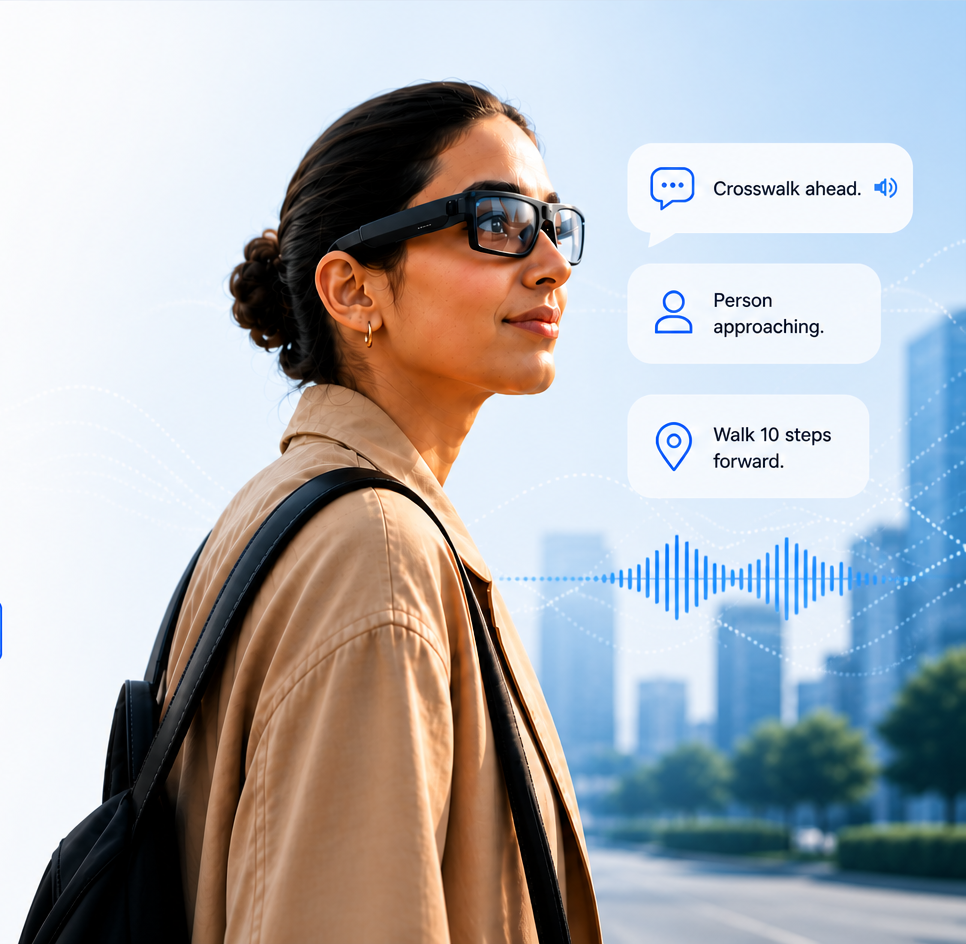
Concept image; displayed outputs are illustrative, not currently available features.
Scientific foundation
Published work on tactile icons, spatial haptics and sensory substitution informs the questions Sensivo is exploring. Deaf and DeafBlind participants should shape what alerts mean, how they feel and when they are useful.
Explore research & referencesResearch before claims
Privacy and local processing where practical
User-created, customizable tactile patterns
Clear separation between prototypes and life-safety systems
Sensivo's emergency-alarm work is a research concept for supplemental notification. Certified alarms detect hazards and remain independent. Initial demonstrations use simulated signals only, never real-world emergency reliance.
Read our alarm communication concept →An independent, noncommercial accessibility initiative. The project's goal is to remain free to users.
Get in touchThe Fall 2026 research evidence includes the full technical concept brief, alarm and haptics guide, and every slide of the research deck.